Merica: A Bold, Handmade-Ready Embroidery Design
First Impressions: Patriotic, Punchy, and Purpose-Built
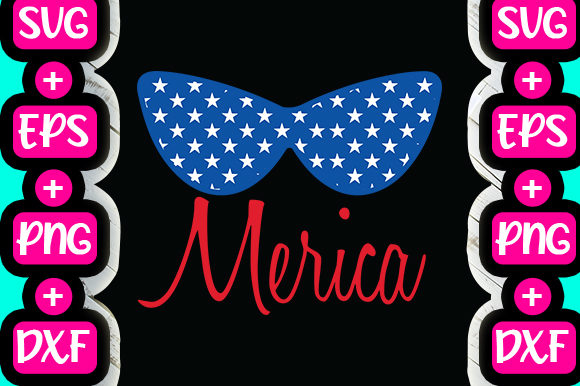
When I opened Merica for the first time—prepping it for a custom embroidered tote bag order—I felt that familiar spark: this isn’t just clipart. It’s got rhythm in its letterforms, weight in its presence, and a grounded confidence that reads instantly. The design leans into playful patriotism without tipping into caricature. Its clean lines, balanced negative space, and slightly stylized “M” and “A” suggest intention—not just vector tracing. As a machine embroidery design, it feels like it *wants* to be stitched: bold enough for visibility at arm’s length, simple enough to avoid thread breaks on cotton twill or medium-weight denim.
Where Merica Shines (and Where It Needs Care)
I used Merica on a natural canvas tote for a local boutique’s summer launch—and it landed perfectly. The stitch clarity held up across 14” of fabric tension, and customers loved how legible it stayed after washing. That said, context matters. On baby onesies? I’d skip it unless paired with soft applique backing and reduced density—it’s got presence, not delicacy. On stretchy jersey tees? Only with cutaway stabilizer and careful hooping; the horizontal stretch can distort the word’s width if tension isn’t dialed in.
Merica works best where personality meets practicality: sweatshirt embroidery (especially on midweight fleece), embroidered patches (it scales cleanly down to 3.5”), aprons for kitchen boutiques, and pillow covers for rustic-chic home goods. I’ve also layered it subtly on tea towels—stitched in ecru on unbleached linen—with excellent tactile contrast. But on dark fabric? Test your thread colors first. A navy background needs more than standard white thread to pop; consider heather gray or metallic silver for dimension. And on curved surfaces—like structured caps—check whether the original outline accommodates front-panel tapering. If not, a slight vertical compression may help.
Real-World Fit for Your Craft Business
If you’re an Etsy seller or small shop owner building a cohesive holiday embroidery collection, Merica is a strong anchor piece. It pairs naturally with stars, stripes, or minimalist wreaths—but stands alone just as well. I’ve seen it elevate personalized gifts: stitched beside a child’s name on a backpack, or centered on a linen napkin set for a Fourth of July wedding. Its visual weight builds perceived value fast. Customers don’t see “a graphic”—they see craftsmanship, confidence, and care.
That said, Merica isn’t built for micro-detail work. There’s no fine serif, no tiny shadow, no gradient fill. That’s a strength—not a limitation. It means fewer stitch jumps, cleaner satin stitch edges, and reliable performance across commercial embroidery machines. For craft fair products, that reliability translates to faster turnarounds and fewer re-dos. For digital product sellers, its SVG, DXF, EPS, and PNG formats make it versatile beyond embroidery: perfect for printable mockups, vinyl decals on mugs, or card-making kits. Just remember—those formats are *starting points*. They aren’t pre-digitized embroidery files. You’ll need to digitize thoughtfully for stitch density, underlay, and pull compensation.
Design Notes Every Embroiderer Should Check
- Test on scrap fabric first—especially if using textured weaves like burlap or looped terry. What looks crisp on screen can blur when stitched.
- Review stitch density before scaling. Too dense on lightweight cotton = puckering. Too sparse on fleece = lost definition.
- Confirm hoop size compatibility. If your smallest hoop is 4x4”, check whether Merica fits comfortably—or if it’ll require repositioning mid-stitch.
- Inspect small details: corners, inner curves, and terminal points. Does the “R” leg hold shape? Does the “C” close cleanly? These affect professionalism in finished product shots.
- Try black-and-white mockups before committing to color. Contrast tells you more about legibility than RGB previews ever will.
- Compare light vs. dark fabric backgrounds in real lighting—not just your monitor. Natural daylight reveals halo effects and thread sheen shifts.
- Use proper stabilizer: tear-away for stable wovens, cutaway for knits, and fusible + tear-away for delicate linens.
- Verify licensing before selling finished items or bundling Merica into digital embroidery packs. The description says it’s usable for t-shirts and crafts—but commercial resale rights aren’t stated outright. When in doubt, reach out to the source.
Final Thought: Merica Is More Than a Graphic—It’s a Statement Piece
As a designer who’s stitched hundreds of T-Shirt Designs and Graphics for clients—from indie coffee roasters to heritage textile studios—I keep returning to pieces that balance spirit with structure. Merica does that. It’s not trying to be everything. It’s confident in its voice, adaptable in execution, and honest in its simplicity. Whether you’re embroidering a one-off personalized gift or building repeatable small shop product lines, it adds authenticity—not just decoration. Just treat it like a collaborator: test it, listen to how it behaves on fabric, and let its boldness guide your choices—not the other way around.