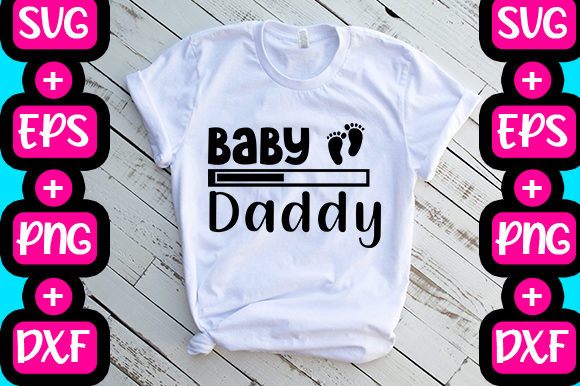
Baby Daddy Design Review for Real Embroidery Work
I have looked at hundreds of designs over the years, and I can tell you right away when something has a clear identity and when it feels like a random collection of letters thrown together. Baby Daddy lands in that first category. It has a mood, a clear audience, and a specific kind of energy that makes sense the moment you picture it stitched out on a finished product. This is not a design that tries to please everyone, and honestly, that is what makes it useful for the right project.
What I notice first is how the phrase carries a mix of humor, sentiment, and modern personality. It feels playful without being childish, which is a surprisingly difficult balance to strike. For anyone who runs a small craft business, sells on Etsy, or takes custom apparel orders, you know that designs with a strong point of view tend to move faster than neutral, overly safe options. Baby Daddy has that kind of voice built right into the lettering and composition.
First Impression and the Mood It Creates
When I opened the file set and started picturing this on real fabric, my mind went straight to giftable products. There is an immediate warmth to the concept, but also a wink of personality that makes it feel less like mass-market decor and more like something a real person would choose for a close friend, a partner, or themselves. The mood sits somewhere between celebration and inside joke, which means it connects emotionally without taking itself too seriously.
From an embroidery perspective, the visual weight of the design matters a lot. If the lettering is too thin, stitches can pull or lose definition on textured fabric. If details are too dense, you risk puckering on lighter materials. Based on the preview and the way the typography is shaped, Baby Daddy appears to have enough presence to hold up well under thread without becoming a stiff, bulletproof patch of stitches. That alone gives me confidence before I even hoop anything up.
Where This Design Naturally Belongs
Some designs fight the fabric. Others settle into it like they were always meant to be there. Baby Daddy belongs on products that carry personal meaning. I could see this working beautifully on a custom embroidered sweatshirt for a pregnancy announcement, a tote bag gifted at a baby shower, or a kitchen towel for a new dad who finally learned to cook. The theme is specific enough to feel intentional but broad enough to fit multiple product categories.
In my own shop, I would probably test this first on a mid-weight cotton canvas tote. The flat surface gives you an honest read on stitch quality, and tote bags are one of those products that customers buy impulsively when the message makes them smile. A design like Baby Daddy on a natural canvas tote, stitched in a warm charcoal or deep navy thread, would absolutely catch attention at a craft fair or in an Etsy listing thumbnail.
Other strong candidates include:
- Baby clothes and onesies — with careful hoop placement and lightweight stabilizer
- Aprons — especially for funny or heartfelt gifts aimed at new parents
- Pillow covers — as part of nursery decor or a cozy living room accent
- Caps and hats — if the design is sized appropriately for curved surfaces
- Embroidered patches — backed with iron-on adhesive for versatile application
- Tea towels — a budget-friendly product with high gift appeal
- Blankets — when you want something soft and sentimental without being overly decorative
Because Baby Daddy is also delivered in versatile formats like SVG, DXF, EPS, and PNG, it expands beyond embroidery work. You can use the same design for printable mockups, vinyl decals, screen-printed mugs, or paper crafts. That consistency across product types is a huge advantage when you are building a cohesive brand look or listing multiple variations in the same shop.
Real Project Scenario: A Custom Tote Bag Order
Let me walk you through how I would actually use Baby Daddy in a real order. A customer messages me and says she wants a personalized gift for her best friend whose husband just became a dad. She wants something funny but tasteful, something the recipient would actually use instead of hiding in a closet. We settle on a natural canvas tote bag with the design embroidered in a soft black thread, centered on the front panel.
Before I stitch on the final bag, I run a test on a scrap of similar weight cotton. I check how the lettering reads at the planned size, whether any thin strokes disappear into the fabric texture, and how the design performs with a medium-weight cutaway stabilizer. I also test it in a single color first, because many customers prefer a clean, understated look over multicolor thread changes that increase cost and production time.
The design stitches out cleanly. The letters are legible, the spacing feels intentional, and the overall footprint fits comfortably within my most-used hoop size. The finished tote looks like something you would find in a thoughtfully curated boutique, not a rushed last-minute gift. That is the kind of result that keeps customers coming back and leaving positive reviews.
How the Design Affects Product Value and Customer Perception
A well-chosen embroidery design does more than decorate fabric. It shapes how a customer feels about the product, how much they are willing to pay, and whether they see it as a generic item or a meaningful purchase. Baby Daddy carries clear gift potential, which immediately increases perceived value. When someone buys a handmade item with this design, they are not just buying thread on fabric. They are buying a moment, a memory, a conversation starter.
From a small business standpoint, that emotional connection translates directly into better margins and stronger buyer engagement. Products that tell a recognizable story photograph well, share easily on social media, and generate word-of-mouth referrals. I have seen designs with half the personality of Baby Daddy outperform technically superior work simply because they connected with the right audience faster.
There is also a branding angle to consider. If your shop specializes in family-themed, dad-focused, or baby-related products, this design slots in naturally alongside other listings without feeling repetitive. Consistency in design voice builds trust. Repeat buyers start to recognize your aesthetic and come back when they need another gift or a new product release.
Where to Use Caution During Production
No design is perfect for every situation, and part of being a responsible reviewer is pointing out where things can go wrong if you rush the process. With Baby Daddy, the main considerations are size, fabric choice, and detail preservation.
On small hoop sizes, any lettering that looks crisp at four inches might become muddy at two and a half. If you are embroidering on baby clothes or infant onesies, you are often working in tighter spaces. Test the design at the exact dimensions you plan to sell before committing to a full production run. Shrink it down too far, and you risk losing the personality that makes the design work in the first place.
Textured fabrics like terry cloth, fleece, or chunky knits can swallow lettering details. A tote bag made from rough burlap or a heavily napped blanket will not show fine strokes the way a smooth cotton twill will. If you plan to stitch on anything with significant texture, consider increasing the design size slightly and using a topper to keep the stitches sitting on top of the pile rather than sinking in.
Stretchy fabrics demand extra stabilizer attention. T-shirts, onesies, and lightweight knit garments shift during stitching if they are not hooped correctly. A design with any moderate stitch density, especially in the lettering, can cause tunneling or distortion on unstable fabric. A good fusible mesh stabilizer and a careful hooping technique solve most of these issues, but you need to be proactive about it.
On dark fabrics, thread color contrast becomes critical. What looks bold and readable on white or cream might disappear on charcoal or navy if the thread choice is not intentional. I always recommend testing the design in a black-and-white mockup first. It forces you to see contrast without being distracted by color, and it reveals any areas where the design might lose impact on darker backgrounds.
For caps and curved surfaces, the flat nature of most typography designs means you need to be mindful of how the arc of the cap interacts with the straight lines of the lettering. If the design is too wide, the edges may distort as they follow the curve. A centered placement with a smaller size often works better than trying to fill the entire front panel.
Practical Embroidery Designer Notes
Over the years, I have developed a mental checklist I run through before I offer any design to paying customers. Here is what I would do with Baby Daddy before listing a single finished product:
- Test on scrap fabric first. Always. No exceptions. Even if the design looks perfect on screen, thread behaves differently than pixels.
- Check thread color contrast. Try at least two or three thread colors against your most common fabric backgrounds. What works on white might fail on oatmeal or heather gray.
- Review stitch density. If the design feels stiff or causes the fabric to buckle, you may need to adjust density settings in your embroidery software.
- Confirm hoop size. Measure the design dimensions and make sure they fit comfortably within your available hoops, leaving enough margin for hooping without pinching the stitched area.
- Inspect small details. Zoom in on any fine lines, serifs, or decorative elements. Ask yourself whether they will survive repeated washing and everyday use.
- Test in black and white. Strip the color away in a mockup and see if the design still reads clearly. This is especially important for online listings where thumbnail images are small.
- Compare light and dark fabric backgrounds. A design that looks amazing on a light tote might lose all definition on a dark sweatshirt if you do not adjust thread colors.
- Use proper stabilizer. Match your stabilizer to the fabric type and stitch density. A lightweight tear-away might be fine for a basic cotton tote, but a stretchy onesie needs something more secure.
- Check licensing terms. Before selling finished products or digital mockups that include this design, confirm what usage rights you have. The provided files cover a wide range of applications including paper crafts, vinyl, decals, scrapbooking, t-shirts, and mugs, but if commercial embroidery sales are part of your plan, verify that your intended use aligns with the terms.
Final Thoughts Before You Stitch
What makes Baby Daddy a strong candidate for real project use is not just the phrase itself, but the way the design holds together visually. It has clarity, personality, and enough flexibility to work across multiple product types without losing its identity. Whether you are building inventory for a holiday market, fulfilling custom orders through your online shop, or making a one-off gift for someone special, this design brings a ready-made sense of occasion that takes some of the creative pressure off your shoulders.
For embroidery specifically, the key is in the testing. Do not assume the first stitch-out will be the final version. Play with thread colors, try it on different fabric weights, and pay attention to how the lettering behaves at various sizes. The designers and small business owners who treat every new design as a prototype rather than a finished product are the ones who consistently deliver work that customers love and recommend.
Baby Daddy earns its place in a well-curated design library. It is not trying to be trendy in a way that will feel dated next season. It taps into something real, and in a market crowded with generic graphics, that genuine connection is worth more than any technical specification I could list here.