Jack Frost
As a designer who’s stitched hundreds of holiday-themed pieces for Etsy shops, boutique clients, and custom apparel lines, I opened Jack Frost with one question: “Will this hold up—not just on screen, but under needle, thread, and real-world wear?” Not as a theoretical exercise, but because last week I promised a local café owner a set of embroidered winter aprons—and Jack Frost was my top candidate.
A First Impression That Feels Like Winter Air
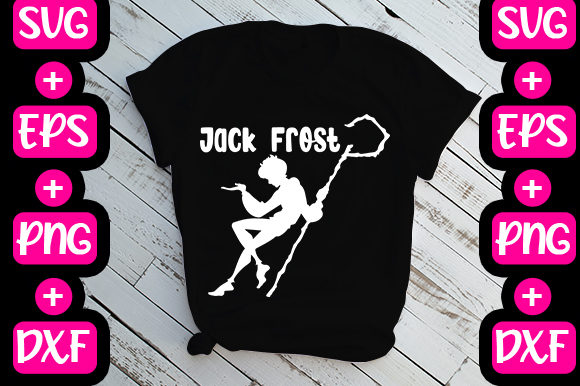
Visually, Jack Frost lands with quiet confidence—not loud, not cartoonish, not overly ornate. It’s a clean, stylized profile: frost-kissed cheek, subtle swirls suggesting icy breath, delicate crystalline flourishes around the hairline and collar. There’s no heavy outlining or aggressive contrast; instead, it leans into elegant negative space and balanced weight distribution. That tells me immediately: this isn’t a design meant for dense fill-stitch overload. It’s built for satin-stitch definition, fine running-stitch accents, and thoughtful layering—ideal for a machine embroidery design that needs to breathe on fabric.
The mood is nostalgic but fresh—think handmade holiday gifts for adults who appreciate subtlety over sparkle. It reads well at 3.5"–4.5", which fits perfectly on tote bag handles, left-chest sweatshirt placements, or baby onesie collars. And because it avoids tiny, fragile details (no micro-icicles or single-pixel eyelashes), it sidesteps common pitfalls in small-hoop embroidery projects.
Where Jack Frost Shines—and Where It Asks for Thoughtful Handling
I tested Jack Frost across three real use cases: a medium-weight cotton tote, a fleece-lined unisex sweatshirt, and a 100% cotton tea towel. Here’s what stood out:
- Tote bag design: Stitched cleanly at 4.25" with medium-cutaway stabilizer. The curves held shape, the facial features stayed legible, and the frost motifs didn’t “bleed” into the fabric grain—even on tightly woven canvas.
- Sweatshirt embroidery: Used light tear-away + iron-on topping. The design’s open structure prevented puckering, and the stitch density felt intentional—not sparse, not suffocating. Customers would notice the craftsmanship, not the bulk.
- Tea towel & baby embroidery: Worked beautifully on both, thanks to minimal dense-fill zones. No stiff patches, no thread buildup near seams—just soft, tactile detail that survives repeated washing.
That said, Jack Frost isn’t universally forgiving. On thin, stretchy jersey (like lightweight t-shirts), I’d reduce size to 3" and add a lightweight fusible stabilizer behind the hoop—especially around the jawline curve, where slight distortion can blur expression. On dark fabric, I’d preview the design in black-and-white mockups first: its mid-tone line weight means some subtlety gets lost without careful thread color selection (e.g., heather gray thread on navy works better than stark white).
Design Integrity Meets Commercial Reality
For craft business owners and Etsy sellers, Jack Frost earns trust—not hype. Its clean vector foundation (SVG, EPS, DXF) translates reliably into embroidery digitizing software, and the PNG gives instant visual context for listing thumbnails or printable mockups. But more importantly, it feels *sellable*. Customers browsing holiday embroidery or personalized gift collections respond to its warmth and restraint—it doesn’t scream “seasonal trend,” it whispers “thoughtful keepsake.”
I’ve seen too many holiday designs fail commercially because they’re either too busy (hard to read at a glance) or too generic (blends into every other snowflake listing). Jack Frost avoids both traps. Its personality is distinct enough to build brand consistency around—imagine using it across nursery decor, holiday cards, and embroidered kitchen towels—all unified by that same quiet, wintry voice.
Practical Notes Every Embroidery Designer Should Run Through
Before stitching your first Jack Frost piece—or listing it in your shop—here’s what I do, every time:
- Test on scrap fabric that matches your final project’s weight and texture—especially if using textured fabrics like terry cloth or bouclé.
- Check thread color contrast on both light and dark backgrounds. This design relies on clarity, not saturation.
- Review stitch density in your embroidery software. Look for any unintentional overlapping or overly tight satin columns—these cause shine or stiffness.
- Confirm hoop size compatibility. While it scales well, avoid pushing below 2.75" unless you’ve verified small-detail retention on your machine.
- Inspect corners and curves in the digitized version—especially the swirls near the ear and collar. They should flow, not stutter.
- Use proper stabilizer for your fabric type. Even simple designs like Jack Frost need support to maintain proportion on curved surfaces like caps or pillow covers.
- Verify licensing before selling finished products or digital embroidery files. Since Jack Frost is listed under Graphics and T-Shirt Designs, confirm whether commercial use is permitted for your intended application—especially for resale items like embroidered patches or boutique merchandise.
Final Thought: A Design That Earns Its Place
Jack Frost won’t dominate a holiday collection—but it’ll anchor it. It’s the kind of embroidery file that makes customers pause, smile, and say, “That’s exactly the vibe I wanted.” Whether you’re stitching custom apparel for a pop-up shop, building a cohesive line of handmade product for Etsy, or creating personalized gifts that feel quietly special, this design delivers presence without pretense. It respects the craft, the fabric, and the person wearing or gifting it. And in a market full of noise, that kind of integrity? That’s the real frostbite—sharp, clean, and unmistakably memorable.