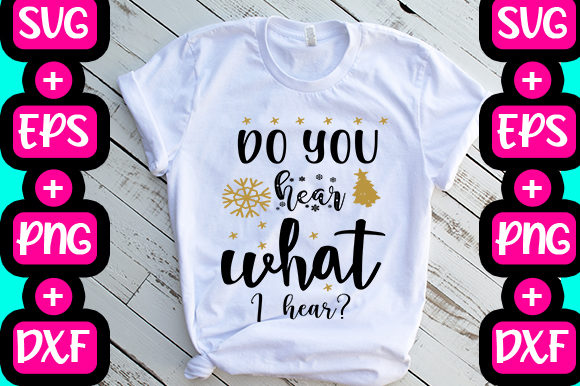
Do You Hear What I Hear?
A Designer’s First Look: Charm with Quiet Confidence
When Do You Hear What I Hear? landed in my inbox, I paused—not because it shouted, but because it *listened*. This isn’t a loud, glitter-bombed Christmas graphic. It’s a gentle, lyrical design with soft curves, balanced negative space, and a clear visual rhythm. The typography leans slightly script-like but remains legible at modest sizes, and the overall shape feels intentional for placement—centered, horizontal, and just wide enough to anchor a chest pocket or sleeve without crowding. As a machine embroidery design, its personality reads as warm, handmade, and quietly festive—perfect for customers who value sincerity over spectacle.
Real Project Test: Embroidering a Holiday Tote Bag for My Local Boutique
Last week, I prepped Do You Hear What I Hear? for a small-batch run of canvas tote bags—part of a holiday collection for a neighborhood gift shop. I chose medium-weight natural canvas, a tear-away + cut-away stabilizer combo, and matte polyester thread in deep navy and cream. Right away, the design held up: clean satin stitch edges on the letterforms, smooth fill stitch in open areas, and no visible puckering—even across the bag’s slightly textured surface. The phrase stitched crisply at 4.5 inches wide, fitting neatly inside a standard 5x7 hoop. Customers responded immediately: “It feels like a carol you can hold,” one said. That’s the quiet power of this embroidery file—it doesn’t need bells to ring true.
Where It Shines (and Where It Asks for Care)
Do You Hear What I Hear? works beautifully on:
- Sweatshirt embroidery — Its moderate density avoids stiffness, and the clean lines read well against fleece texture.
- Personalized baby embroidery — On organic cotton onesies or burp cloths, it reads sweetly without overwhelming delicate scale.
- Embroidered patch — Clean outer edges and consistent stroke weight make it ideal for iron-on or sew-on patches.
- Holiday embroidery for kitchen towels and aprons — The balanced layout stays legible even after repeated washing (when properly stabilized).
- Tote bag design and pillow covers — Its horizontal orientation and breathing room translate naturally to larger, flat surfaces.
But be thoughtful with:
- Small hoop sizes — At under 3 inches wide, fine details (like subtle curve endings in the script) may blur. Test before committing to a 4x4 hoop.
- Stretchy fabric — Knits demand extra stabilization; consider a light fusible + tear-away blend to prevent distortion.
- Dark fabric — While the design itself is neutral, thread color contrast matters. A pale gold or ivory thread lifts it elegantly on charcoal or forest green—but avoid near-white thread on black unless your machine handles fine detail flawlessly.
- Curved surfaces like caps — The horizontal flow doesn’t wrap naturally. Best reserved for front-panel flat embroidery, not crown or curve-heavy placements.
What It Adds to Your Handmade Product—and Your Reputation
This isn’t just another holiday embroidery file. Do You Hear What I Hear? elevates perceived value because it *feels* considered—not templated. When used on a custom apparel piece or boutique-branded tea towel, it signals care in curation. Buyers notice that. They trust a maker who chooses designs with tonal consistency, legibility, and emotional resonance. For Etsy sellers and small shop owners, that translates directly to repeat customers and higher engagement on listings—especially when paired with a simple, authentic photo showing the design stitched cleanly on real fabric.
As a digital embroidery file, it also supports strong branding continuity. Whether you’re offering monogrammed sweatshirts or holiday-themed nursery decor, Do You Hear What I Hear? fits seamlessly into a cohesive seasonal line—no jarring style shifts, no forced whimsy. And because it’s offered in SVG, DXF, EPS, and PNG, it scales gracefully across mediums: vinyl decals for mugs, printable mockups for your Etsy thumbnails, or even paper crafts for handmade cards.
Practical Notes from My Embroidery Workbench
Before stitching your first Do You Hear What I Hear? project:
- Always test on scrap fabric — Especially if using textured weaves or blends. Watch for skipped stitches in tight curves.
- Review stitch density — Not too sparse (risking fabric show-through), not too dense (causing stiffness). This design lands in the sweet spot—but verify with your thread and stabilizer combo.
- Confirm hoop size compatibility — The original file likely targets common hoops, but double-check dimensions before nesting multiple designs.
- Inspect small details — Zoom in on letter terminals and spacing. If using for baby embroidery or personalized gifts, clarity at smaller scales is non-negotiable.
- Test in black-and-white mockups — Helps assess contrast and hierarchy before cutting thread.
- Use proper stabilizer — Medium-weight cut-away for knits, tear-away for stable wovens. Skipping this step undermines even the best embroidery file.
- Check licensing — Since this is listed as a Graphics product in the T-Shirt Designs category, confirm whether commercial use (e.g., selling finished embroidered totes) is permitted. When in doubt, contact the seller.
Finally—don’t overlook how Do You Hear What I Hear? performs as a finished product. It invites pause. It pairs well with minimalist packaging, handwritten notes, and quiet gifting moments. In a market flooded with busy, over-designed holiday graphics, this embroidery file stands out by breathing easy. That’s rare. And valuable.