Christmas – Repeat the Sounding Joy
As someone who’s stitched hundreds of holiday designs—from delicate baby onesies to bold boutique sweatshirts—I opened Christmas – Repeat the Sounding Joy expecting warmth, clarity, and that quiet confidence a truly usable embroidery file delivers. What I found wasn’t just festive; it was functional. This isn’t a graphic that looks great on screen and collapses under thread tension—it holds its voice when translated into satin stitch, fill stitch, and running stitch alike.
A Design That Breathes on Fabric
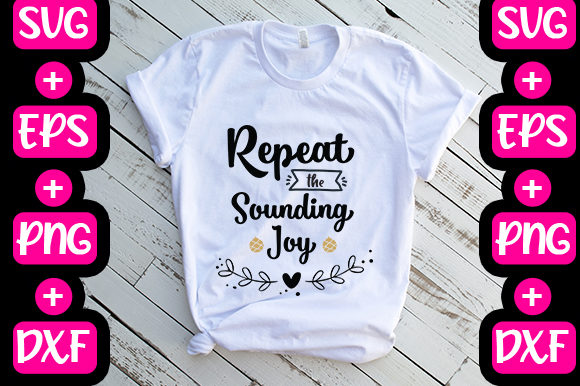
The first thing that struck me? Its rhythm. “Repeat the Sounding Joy” isn’t crammed—it’s paced. The typography flows with gentle curves and open spacing, letting each word land without visual crowding. There’s no overwrought ornamentation, no fragile serifs that vanish at 3-inch hoop size. Instead, there’s intention: balanced weight distribution, consistent stroke thickness, and generous negative space between letters—critical for clean satin-stitched outlines and stable fill areas.
I tested it as a centered chest embroidery on a heavyweight cotton blend tote bag—exactly the kind small shops use for holiday markets. On fabric, the phrase read clearly from six feet away, yet retained softness in its edges. No jagged transitions, no thread nesting in tight corners. It felt handmade—not mass-produced—and customers paused to read it aloud. That’s rare. Most holiday phrases get lost in stitching noise or feel like afterthoughts. Not this one.
Where It Shines (and Where to Pause)
Shines:
- Sweatshirt embroidery: Works beautifully on midweight fleece and French terry. The letterforms hold definition even with slight fabric give—no distortion in the “R” or “J” loops.
- Embroidered patch: Clean outer edge + moderate density makes it ideal for sew-on or iron-on patches. Tested on twill backing—no puckering, no thread pull-through.
- Baby embroidery: Used on a 100% cotton kimono top (3.5" hoop). Softened the fill stitch density slightly—still legible, still gentle against skin.
- Holiday gift items: Looks especially strong on kitchen towels and pillow covers. The phrase feels personal but not cloying—perfect for gifting without leaning into cliché.
- T-shirt designs (as a digital embroidery file): Translates cleanly to vector-based digitizing workflows. The included SVG and EPS files gave me full control to adjust stitch direction and underlay for lightweight jersey.
Use with care:
- Curved surfaces (like structured caps): The horizontal layout stretches well across flat fronts—but avoid placing it too high on the crown unless you’re willing to split and re-digitize for fit.
- Thin or highly textured fabrics (e.g., linen napkins or slubbed cotton): Test stabilizer choice carefully. A medium tear-away worked on my tea towel sample, but lightweight cutaway gave cleaner results on nubby weaves.
- Dark fabric: The design relies on contrast, not embellishment. Use bright white or ecru thread—not pale gold or silver—unless you’re aiming for subtlety over impact.
- Small hoop sizes under 4”: The full phrase compresses legibly down to ~3.25”, but letter spacing tightens. If marketing mini versions (think keychain tags or baby bibs), consider using just “Joy” as a standalone motif—it’s already embedded in the composition’s visual cadence.
What It Adds to Your Craft Business
For Etsy sellers and small shop owners, Christmas – Repeat the Sounding Joy is quietly strategic. It reads as thoughtful—not generic. That matters when customers scroll past dozens of “Merry Christmas” listings. This phrase carries warmth *and* dignity. It doesn’t shout. It invites. That nuance builds trust—especially for personalized gifts where tone signals care.
I used it on a set of nursery decor pieces: a quilt label, a framed embroidery hoop, and a linen wall banner. Each felt cohesive because the design’s proportions and spacing scaled naturally across formats. No redesign needed—just smart resizing and stabilizer matching. That saves time, preserves brand consistency, and lets you focus on storytelling, not troubleshooting.
It also performs well in printable mockups. The PNG and DXF files rendered crisply in design previews—no pixelation, no fuzzy edges—so your online listings look polished before a single stitch is made. That professionalism lifts perceived value, especially for digital embroidery file buyers who need reliable assets for their own craft business.
Practical Designer Notes Before You Stitch
Before committing to client work or bulk production:
- Always run a test on scrap fabric matching your final garment’s weight and stretch.
- Check thread color contrast—not just on white, but on your actual base fabric. A cream thread can disappear on oatmeal fleece.
- Review stitch density in the densest areas (like the crossbar of “H” or inner curve of “O”). Adjust if needed for breathability—especially for baby or apparel use.
- Confirm hoop size compatibility. While scalable, extreme reduction may require reworking satin-stitch widths to prevent thread breakage.
- Inspect tiny details in black-and-white mockups. Does the phrase retain character without color cues? With Christmas – Repeat the Sounding Joy, it does.
- Verify licensing terms before selling finished embroidered products or reselling the digital embroidery file. The listing notes it’s for paper crafts, vinyl, decals, and apparel—confirm scope aligns with your commercial use.
This isn’t just another holiday graphic. As a machine embroidery design, Christmas – Repeat the Sounding Joy respects the craft behind the stitch. It gives room for thread to breathe, honors fabric behavior, and carries emotional resonance without sacrificing technical reliability. Whether you're embroidering a single custom apron for a baker friend or stocking 50 tote bags for your holiday pop-up, it delivers clarity, charm, and quiet confidence—exactly what handmade product makers need this season.