A Very Special Delivery
First Impressions: Playful, Precise, and Perfectly Halloween
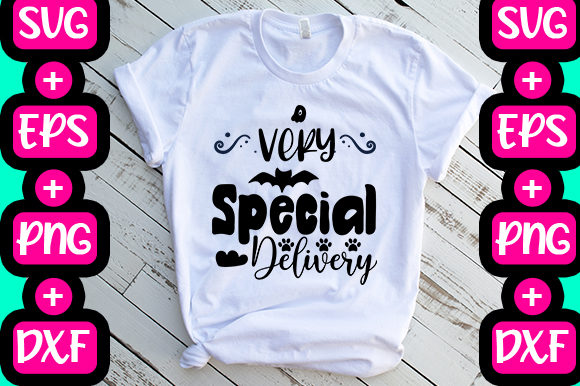
When I opened A Very Special Delivery, I didn’t just see a Halloween graphic—I felt its intention. It’s got that warm, slightly mischievous charm: friendly ghosts, a tiny bat mid-flutter, maybe a wrapped package with a bow that looks like it arrived just in time for trick-or-treating. The layout is balanced but not rigid—there’s breathing room between elements, which immediately tells me this wasn’t rushed through auto-trace. As an embroidery designer who’s stitched hundreds of holiday motifs, I appreciate how the shapes avoid overly tight corners or fragile stems. That matters when you’re translating vector lines into satin stitch curves or fill-stitch clusters on real fabric.
Real-World Test: A Custom Embroidered Tote for a Local Bakery’s Halloween Pop-Up
Last week, I used A Very Special Delivery to embroider a set of organic cotton tote bags for a neighborhood bakery’s October event. They wanted something joyful—not spooky—something that said “treats are coming” without leaning into horror tropes. We stitched it at 3.8" wide on the front pocket, using medium-weight tear-away stabilizer and 40-weight rayon thread. The result? Crisp edges, no puckering, and zero thread breaks—even on the curved seam where the pocket met the bag body. Customers kept asking, “Is that *stitched*?” That’s the gold standard: when handmade quality reads as intentional, not improvised.
Where It Shines (and Where to Pause)
A Very Special Delivery works beautifully for sweatshirt embroidery, baby onesies, and embroidered patches—its moderate detail level holds up across fabric types without demanding ultra-fine needles or specialty threads. On t-shirts? Yes—but stick to mid-to-heavy cotton blends; lightweight jersey tends to distort the subtle gradients in the ghost’s shading unless you add cut-away stabilizer underneath. For caps or curved surfaces, scale down to 2.5" or less, and avoid placing it near the bill seam unless you’ve tested hoop clearance first.
It’s also a quiet standout on tea towels and pillow covers. The composition naturally centers itself, so you don’t need extra framing or borders—just clean stitching and thoughtful placement. That simplicity builds trust: customers recognize craftsmanship when they don’t see overcrowded fills or frantic running-stitch outlines trying to “fix” a weak design.
Fabric & Function Notes You’ll Actually Use
- Dark fabric? Test contrast early—some of the lighter gray tones in the package ribbon soften on navy or charcoal unless you boost thread brightness or switch to off-white.
- Thin or stretchy fabric? Always pair with appropriate stabilizer. This isn’t a low-density fill-stitch design—it has intentional texture, so skipping stabilization risks shadowing or distortion.
- Small hoop sizes? At 3" wide, it fits most 4x4 hoops comfortably—but check the height. If your machine struggles with taller motifs, rotate the design slightly or trim excess vector whitespace before digitizing.
- Frequent washing? Avoid dense satin-stitch areas on high-friction zones (like tote bag handles). Stick to fill or tatami stitches there—and always pre-wash fabric to prevent shrinkage surprises.
What It Adds to Your Craft Business—Beyond the Stitch
As an Etsy seller and small shop product developer, I look at designs like A Very Special Delivery not just as embroidery files, but as brand extensions. It reads cohesive: festive but refined, nostalgic but fresh. That makes it ideal for boutique merchandise—think limited-run aprons for a Halloween baking kit, or personalized baby blankets with names tucked beneath the bat’s wing. It doesn’t scream “clip art.” It feels curated. And that perception lifts perceived value: buyers pay more for pieces that feel designed, not downloaded.
I’ve seen too many crafters lose sales because a design looked great on screen but fell flat after stitching—blurred edges, muddied lettering, or proportions that collapsed under thread tension. A Very Special Delivery avoids those pitfalls. Its spacing is generous, its line weights consistent, and its focal points (the gift, the ghost’s face) hold visual weight even at smaller scales. That translates directly to customer engagement: people pause, smile, ask questions. That’s how handmade products become conversation starters—and repeat purchases.
Practical Designer Checks Before You Stitch
- Test on scrap fabric *first*—especially if using textured weaves like linen-blend tea towels or looped terry.
- Review stitch density in your embroidery software. Look for overfilled zones (ghost eyes, ribbon folds) that could cause stiffness or thread buildup.
- Check licensing: since A Very Special Delivery is listed as a Graphics product and includes SVG/DXF/EPS/PNG, confirm whether commercial use (e.g., selling finished embroidered totes on Etsy) is permitted under the original license.
- Mock it up in black-and-white—this reveals contrast issues invisible on screen, especially for light-on-light or dark-on-dark applications.
- Compare how it reads on both light and dark backgrounds. Some Halloween designs vanish on black fabric unless adjusted manually.
- Verify hoop size compatibility *before* hooping—don’t assume “fits 4x4” means it fits your specific machine’s usable area.
Final Thought: Not Just Another Halloween Graphic
A Very Special Delivery isn’t built for one-off novelty—it’s built for reuse, reinterpretation, and reliability. Whether you’re stitching a single personalized gift or producing 50 embroidered sweatshirts for a school fundraiser, it delivers consistency without sacrificing character. It respects the craft: no unnecessary complexity, no visual noise, no hidden traps for the embroiderer. In a market flooded with over-digitized, under-tested graphics, that kind of thoughtful execution is rare—and valuable. Keep it in your go-to folder for holiday embroidery, custom apparel, and small shop products that need to feel both special and sincerely made.